Those Who Mourn
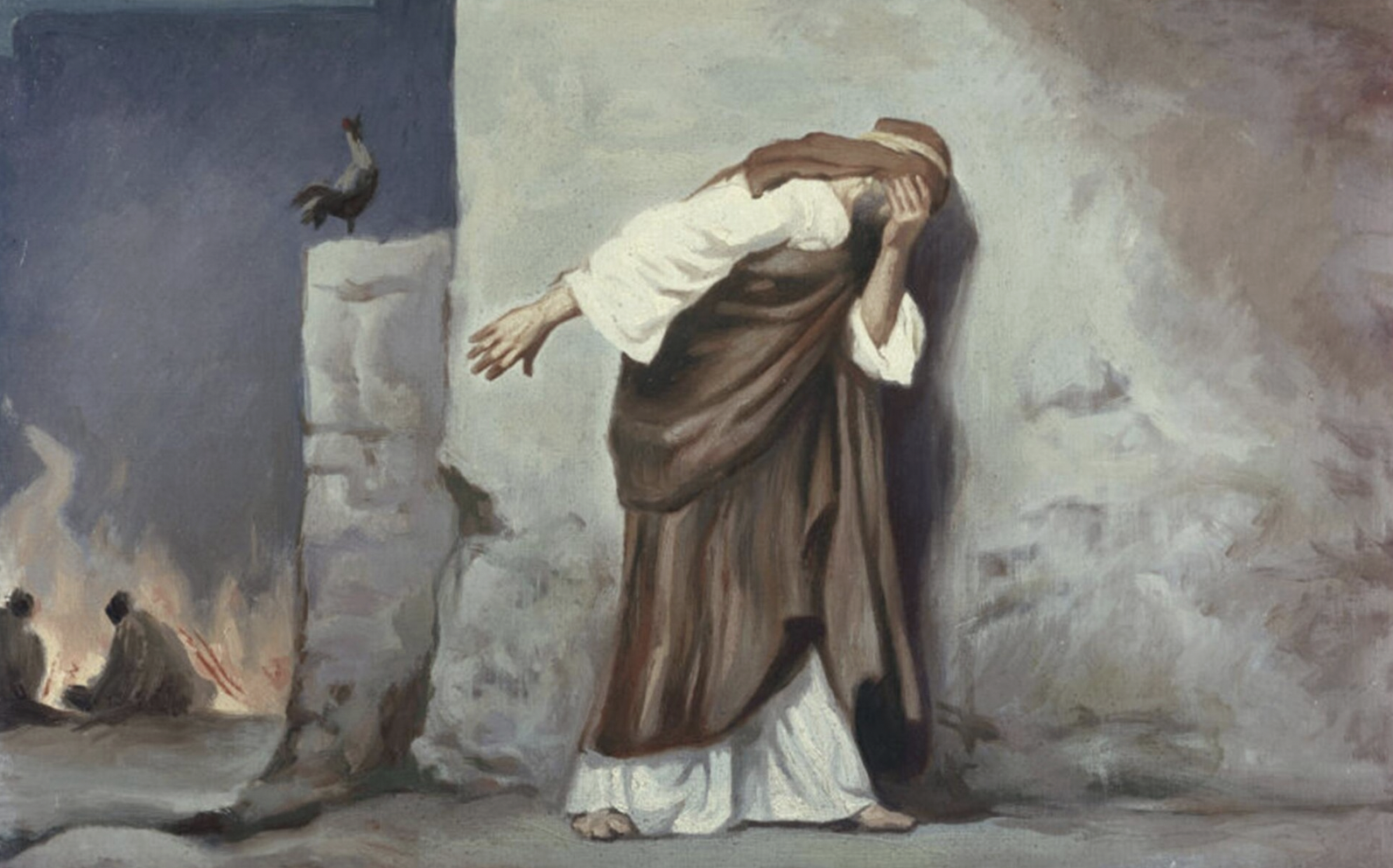
Peter’s denial by Robert Leinweber (1845-1921)
“Blessed are those who mourn, for they shall be comforted.” - Matthew 5:4
—
What kind of mourning opens the human heart to God?
At first glance, this Beatitude appears paradoxical.
How are those who mourn to be considered happy?
Mourning seems opposed to blessedness because we associate blessing with ease and satisfaction, or even certainty and success.
But the mourning and blessing of which Jesus speaks is at the root of something deeper: the awakening of the soul to reality.
The Greek word here, πενθοῦντες (penthountes), occurs 10 times in the New Testament.
Because it denotes the strongest, most severe form of manifested grief - a sorrow so consuming it can’t be hidden - its usage elsewhere falls into three distinct and powerful categories.
-
The First: Mourning the Death of a Loved One
In its most literal, historical sense, pentheó is a "graveyard word" used to describe the desolation of losing someone to death.
For example, in Mark 16:10, following the crucifixion, Jesus's followers are described as “mourning (penthousi) and weeping" before they realize He has risen.
In Matthew 9:15, Jesus uses the word to explain why His disciples do not fast, asking, "Can the wedding guests mourn (penthein) as long as the bridegroom is with them?"
He equates His future departure (death) with deep mourning.
-
The Second: Mourning & Grieving Over Sin
The New Testament frequently shifts pentheó from a physical death to a spiritual one, using it to describe the intense grief a person or community should feel over sin.
In 1 Corinthians 5:2 the Apostle Paul scolds the Corinthian church for tolerating sexual immorality in their congregation, writing, "And you are arrogant! Ought you not rather to have mourned (epenthēsate)?" He expected them to treat the presence of sin with the same heavy grief as they would treat the death of a loved one.
In 2 Corinthians 12:21 Paul expresses fear that upon his next visit, he will be forced to mourn (penthēso) over many of those who sinned earlier and have not repented.
-
The Third: Mourning Cosmic Ruin and Judgment
In the Book of Revelation, the word is used to describe the utter despair of those who collaborate with evil systems when judgment finally arrives.
For example, in Revelation 18:11 & 18:15, when the corrupt global system ("Babylon") falls, the Bible notes that "the merchants of the earth weep and mourn (penthousin) for her, since no one buys their cargo anymore."
-
Every time pentheó is used, it represents a grief of finality or catastrophic loss.
Whether it’s the loss of a life, the loss of holiness in the Church, or the total collapse of a worldly empire, when Jesus says "Blessed are those who mourn,” He is calling for this level of broken-heartedness over the spiritual bankruptcy of the world.
—
This kind of broken-heartedness is the grief that comes with finally seeing the damage of sin, the distance between our hearts and God, and the suffering of a world estranged from Love itself.
But this interior sight only occurs when the heart becomes tender enough to break.
The saints often speak of this as the grace of compunction, a profound spiritual gift often described as a “beneficial sting” of the heart.
It’s an intense purifying awareness of one’s own shortcomings that leads to a deep, transformative experience of God’s love and mercy.
Conversely, hardened hearts throughout Scripture can neither truly see nor mourn because they are numb.
In this sense, Matthew 5:4 follows naturally after Matthew 5:3.
First comes poverty of spirit, then comes grief over what that poverty reveals.
The mourning is repentance in its deepest form.
This is why the Fathers often connected holy mourning with tears, as it marks the soul softening under truth and mercy simultaneously.
Peter weeping after he denied Christ is a clear image of this aspect of the Beatitude.
His tears are the beginning of his restoration.
But the mourning is not only over personal sin.
The Christian also begins to mourn with Christ Himself.
He mourns the suffering of others and the wounds they carry, the fragmentation of families, the death of a loved one, and the spiritual brokenness of the world.
The more united the heart becomes to Christ, the more it learns to grieve what He grieves.
This is why sentimental Christianity can never sustain deep discipleship because to truly love is to become vulnerable to sorrow.
But Christ says “They shall be comforted.”
Not distracted.
Not anesthetized.
Comforted.
The Greek word here, paraklēthēsontai, is related to Paraclete - the Holy Spirit, the Comforter.
The comfort promised is divine nearness - the presence of God Himself.
—
While there’s a kind of mourning that leads inward toward bitterness and self-absorption, the mourning of the saints becomes spacious enough for resurrection.
The strange mystery of Christianity is that tears can become doors.
In the Kingdom of God, grief surrendered to Christ enlarges the soul.
The person who has never mourned deeply often remains emotionally fragmented, defended, and shallow.
But the soul that has grieved with God often becomes profoundly alive.
This Beatitude thus signals the sanctification of sorrow.
Christ is teaching that the pathway to joy is transformation through communion amidst suffering.
The blessed are those whose breaking becomes an opening through which God enters more deeply into the heart.
Onward and Upward,
Ted
If you’ve enjoyed these reflections, please consider a paid membership or buy me a coffee.
If now isn’t the right time, I’d be grateful if you shared Into Deep Water with a friend.