Something About Mary
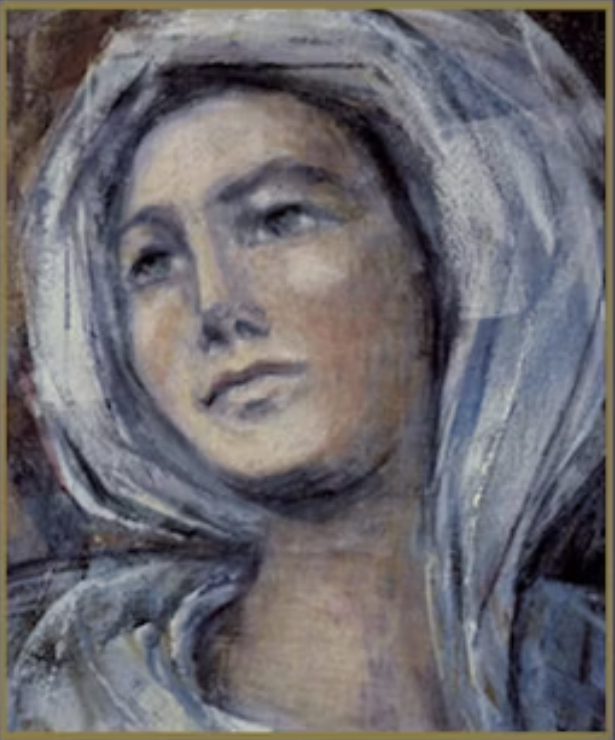
Whether you’re Protestant, Catholic, or Orthodox, there’s something about Mary, and it isn’t sentimentality.
It’s obedience. Real obedience.
The kind that doesn’t negotiate terms or ask for guarantees, but that listens long enough for life to be interrupted by God and then says yes before the consequences are fully known.
Mary does not volunteer for greatness. She consents to smallness. And in doing so, she becomes the mother of the Messiah.
—
If Advent and Christmas are the seasons when God comes to us uninvited, Mary is the place where that coming first lands.
Before there is a manger, before shepherds or angels or songs, there is a young woman who allows her life to be rearranged.
God does not force His way into the world; He asks permission.
That the Almighty waits on the freedom of a human heart...That’s insane.
The world is saved not by a revolution, but by a yes whispered in obscurity. And this yes is costly precisely because it is free.
This moment reveals one of the deepest truths about love: it is always receptive before it is creative.
Mary’s fiat - “Be it done to me according to your word” - is not passive resignation. It’s active trust.
She does not understand everything she is agreeing to, but she understands enough: God is asking for all of her.
Her body. Her reputation. Her future. Her safety. Her plans. Nothing remains untouched. And still, she says yes.
—
We tend to imagine Mary as serene and composed, already haloed by hindsight.
But strip that away and what remains is something more challenging: a woman who risks misunderstanding, scandal, and rejection.
The grace given to her does not preserve her from suffering; it appoints her to it.
And here is where Mary speaks to all Christians.
She is not an obstacle to Christ. She is the first witness to how Christ comes into the world at all.
God does not bypass human freedom. He honors it. He waits for it. He builds upon it.
Fulton Sheen called Mary the world’s first love because she receives Christ before anyone else can love Him.
She holds Him before He can be followed, preached, or proclaimed.
She loves Him not for what He will do with His miracles or healings, but for who He is (even at Christmas) - an infant fragile, dependent, and entrusted entirely to her care.
Before there is theology and mission, there is relationship and motherhood.
This is the uncomfortable lesson Mary teaches us: God does not seek impressive people. He seeks available ones.
He does not ask for brilliance, influence, or strength. He asks for room.
Mary makes room. Not in an inn, but in herself. And because she does, eternity enters time.
Mary does not draw attention to herself. She always points away, from herself to her Son. “Do whatever He tells you” she says at Cana, and then steps back.
That is her role throughout history: not to replace Christ, but to show us how to receive Him. Not to eclipse the light, but to teach us how to stand in it.
If humility is the path of growth, and if Christmas is God’s descent into weakness, then Mary is the human response that makes it all possible.
She shows us that faith is about trust and surrender, and that obedience now opens the door to understanding later.
There is something about Mary because there is something about what it means to be human before God.
She is neither divine, powerful, nor in control. She is free, and she gives that freedom entirely back to God.
And perhaps that is why, across centuries and traditions, she remains impossible to ignore.
Perhaps that is why, amidst Jesus’s most vulnerable moment on the Cross, He says to us, “Behold, your mother!”
In a world obsessed with self-assertion, selfies, and performative status, Mary stands quietly as proof that the greatest thing a human being can do is make room for God and say yes.
The adventure of Christ - our greatest adventure - begins there.
Onward and upward,
Ted
A Book Worth Reading
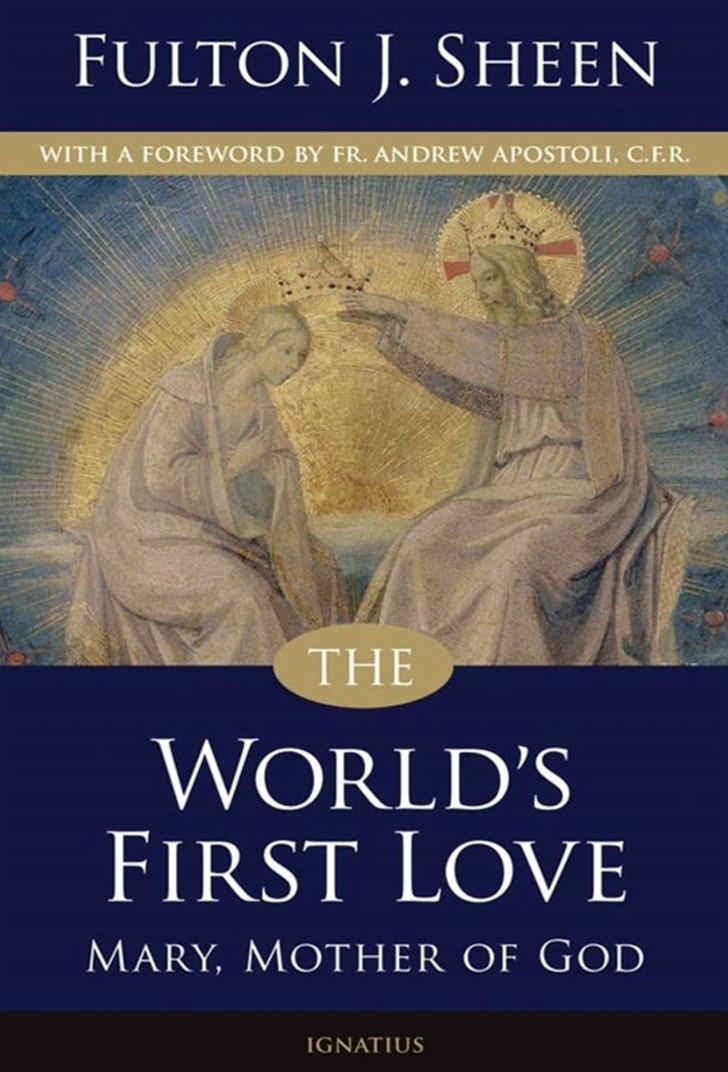
What if the greatest love story in history began not with romance, but with receptivity?
In The World’s First Love, Fulton Sheen presents Mary as the first human heart to fully receive Christ, revealing that salvation enters the world not through power or persuasion, but through a freely given “yes.” With piercing clarity, Sheen shows that to understand Mary is not to be distracted from Christ, but to finally understand how God chooses to come close to us at all.
If you’ve enjoyed these reflections, please consider a paid membership or buy me a coffee.
If now isn’t the right time, I’d be grateful if you shared Into Deep Water with a friend.