Leaving the Nets
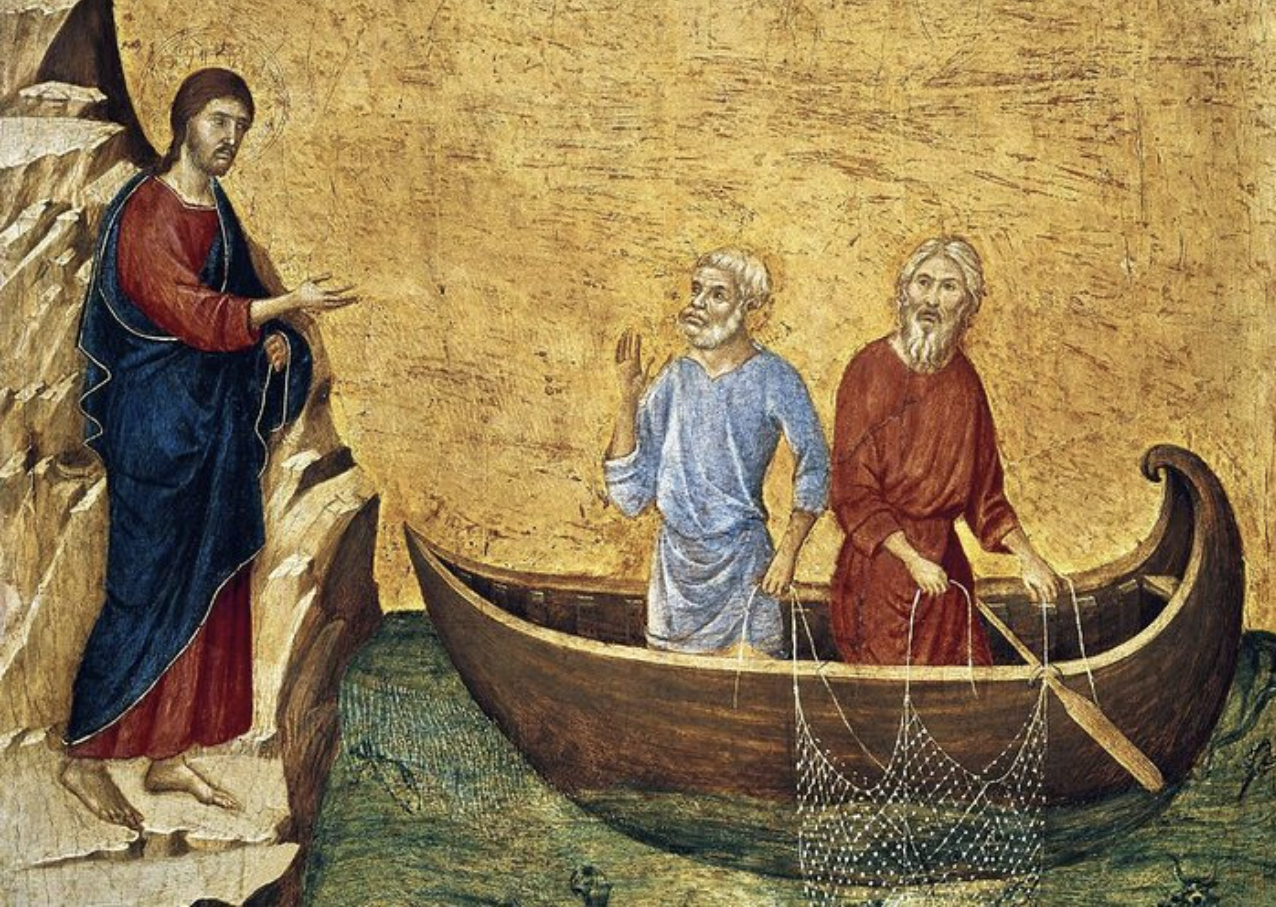
The Calling of the Apostles Peter & Andrew, Duccio Di Buoninsegna, 1308-1311
A couple weeks ago, we considered one possible reason why Jesus first called fishermen.
Today, I want to unpack how those fishermen responded.
“Immediately they left their nets and followed Him.”
—
Immediately is pretty unsettling.
There’s no delay or negotiation. No “hedging their bets” out of precaution.
It doesn’t even seem like they had a plan. They just obeyed.
We might imagine a more comfortable remix: “eventually they left their nets…after they discerned for a few weeks, consulted their friends and family and made all the necessary preparations.”
—
Their nets represented years of discipline at the trade that provided food, income, identity, and predictability.
Jesus does not ask them whether they feel ready. He does not explain the mission plan. He does not assure them of “success” - whatever that means.
He simply speaks, and they follow.
When Christ comes calling, delay is often just fear dressed up as prudence.
Why did they respond without hesitation? Their sea-faring days prepared them for this moment.
At sea, hesitation kills. When the winds shift, you move. When the nets are full, you haul. When the storm breaks, you act.
The sea does not reward endless analysis or perfect conditions. It demands decisiveness amidst uncontrollable conditions.
Leaving their nets exposed them to a different kind of vulnerability than the sea - one where the storms would be social and spiritual.
What Jesus calls them into will, in time, destroy much of what they thought they were.
Their expectations and ambitions. Their understanding of power and victory.
Peter will be crucified upside down. Andrew will be crucified on an x-shaped cross.
They will lose the life they once knew.
—
A tragedy of many Christian lives is that we cling to our nets because our nets are known.
Obedience feels reckless, and immediately feels unreasonable.
We tell ourselves we’ll follow once things settle down. Once we’re more certain and we’ve secured a little more control or command of our circumstances.
But Christ does not call us later. He calls us now.
The nets we’re asked to leave today may not look dramatic.
They may be habits, reputations, carefully curated identities, or ways of coping that once kept us afloat but now quietly keep us from following.
Our nets may not be evil, but they are heavy. And we cannot follow a living Christ while dragging yesterday’s security behind us.
Peter and Andrew did not know where the path would lead. They only recognized who was calling.
And that was enough.
To follow Jesus anew at every turn of life is to accept that some obedience will feel like destruction.
We will lose things we once relied on. We will be misunderstood, and we will face moments where the cost seems unbearable.
But we will not be defeated.
Because when we respond immediately to the voice of Christ, His grace is already making us free.
Onward and upward,
Ted
If you’ve enjoyed these reflections, please consider a paid membership or buy me a coffee.
If now isn’t the right time, I’d be grateful if you shared Into Deep Water with a friend.