Every Disease & Infirmity
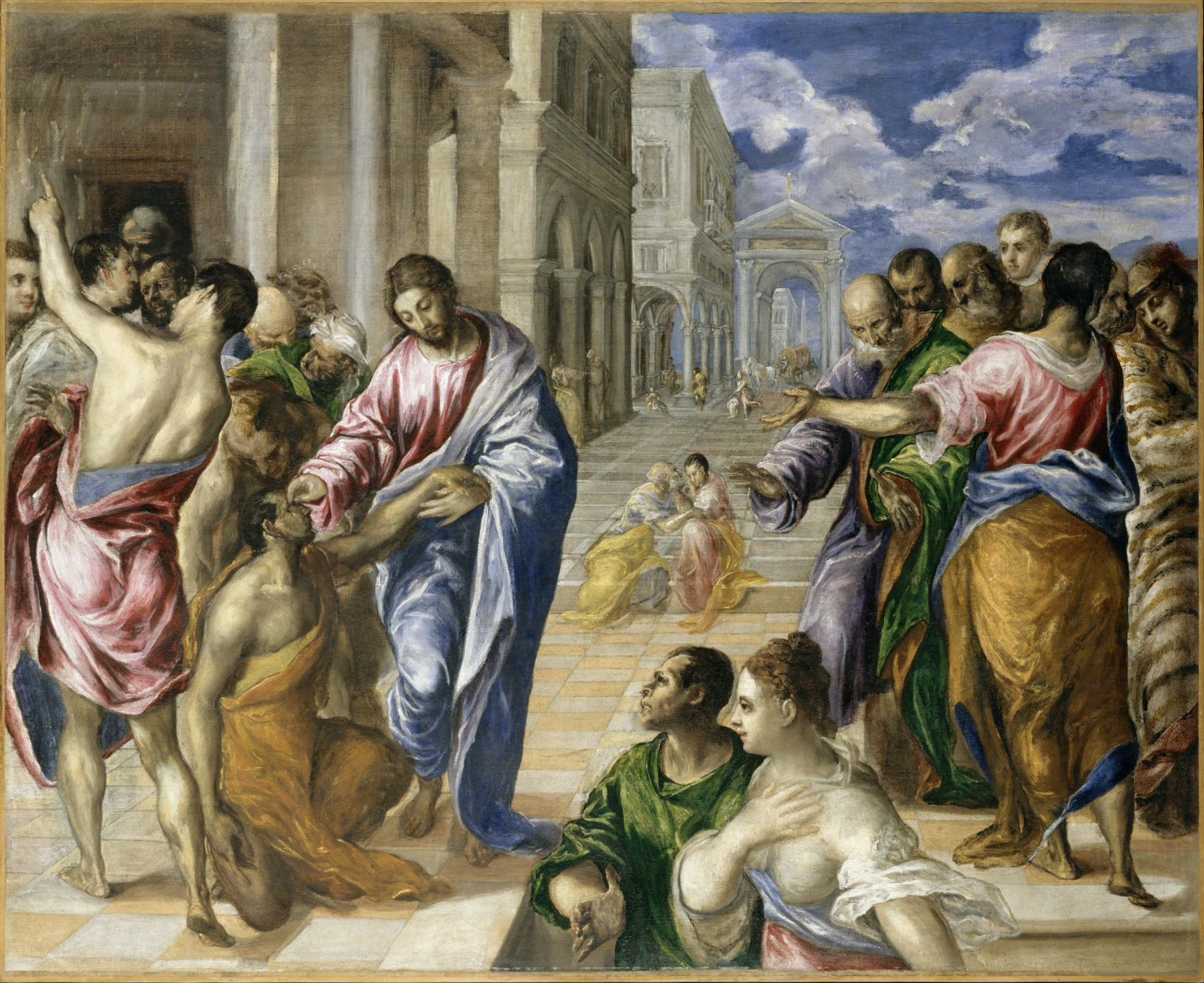
Christ Healing the Blind by El Greco, 1570-1575
At first glance, this verse reads like a summary transition that’s easy to gloss over.
“He went about all Galilee, teaching…preaching…and healing every disease and every infirmity among the people.”
But what’s happening beneath the surface?
What kind of healing is He doing and for what purpose?
In the Greek:
-”healing” is therapeuōn (or therapy)
-“disease” is nosos (or malady; in some uses: moral disability)
-“infirmity” is malakia (or softness/weakness).
In Jerome’s Latin Vulgate, it’s infirmitas (not strong or rooted).
—
Jesus “healing” (therapeuōn) is literally doing therapy.
But malakia doesn’t only refer to bodies that fail.
In the ancient world, it also named moral weakness or effeminacy - souls that had grown soft from a lack of moral courage and resolve.
We might think of C.S. Lewis’s men without chests in “The Abolition of Man.”
These are men whose intellect and appetites have become disconnected from their moral sentiments, leading to a lack of virtue and emotional response to truth, beauty, and goodness.
This ultimately produces hollow, animalistic individuals who can't love what is good or hate what is evil, making them susceptible to relativism and base instincts.
What’s the point for us?
Jesus does not merely affirm us in our moral infirmity or simply manage our symptoms.
Notice the threefold unity of His ministry:
He teaches —> the truth we ought to know.
He preaches —> the life we ought to live.
He heals —> the sin & evil from which we must be freed.
Why this unity?
Because truth without moral demand becomes abstraction. Moral demand without healing becomes crushing. And healing without truth becomes sentimentality.
One of the points beneath the surface of this verse is that His healing is never isolated from repentance.
Forgiveness and command arrive together, as His mercy always carries a summons: Go, and sin no more.
Matthew 4:23 is a declaration of war against everything that fractures the human person - body and soul alike.
Jesus enters Galilee as physician, yes - but also as teacher and king.
As we’ll continue to see in the Gospel, He does not merely tend wounds.
He names causes, confronts lies, and restores what the Fall has made infirm.
And this is why following Him is not comfortable.
Because the kind of therapy that Christ offers isn’t palliative, it’s transformative, and it makes demands.
He calls us to moral firmness: to courage, obedience, and lives no longer governed by softness of soul, but by divine love rooted in truth.
This is the path of our joy in His abundant life.
Onward and upward,
Ted
If you’ve enjoyed these reflections, please consider a paid membership or buy me a coffee.
If now isn’t the right time, I’d be grateful if you shared Into Deep Water with a friend.